

Sensor-based instruments for psychology teaching labs

Low-cost instruments with matched protocols, built by psychologists, for psychologists. Everything here is in development.

The PsyOn Labs symbol: a capital P made of a bar and a ring seated into it

The I and the O from an instrument's power switch. Scroll to seat them.

Fitted together into a P, the way a sensor sits in its housing.

One trial today: 2 numbers per trial

In a mirror-drawing practical, time taken and errors are read off a counter and copied by hand. That is all the trial leaves behind.

The same trial, as a continuous signal

A sensor keeps recording while the participant works. Each dashed line marks a moment in the task, and the trace shows how the body responded around it.

Time taken
42 s
Errors
3

Recorded by hand. Illustrative values.

Time during one trialIllustrative shape, not recorded data

Turn to match

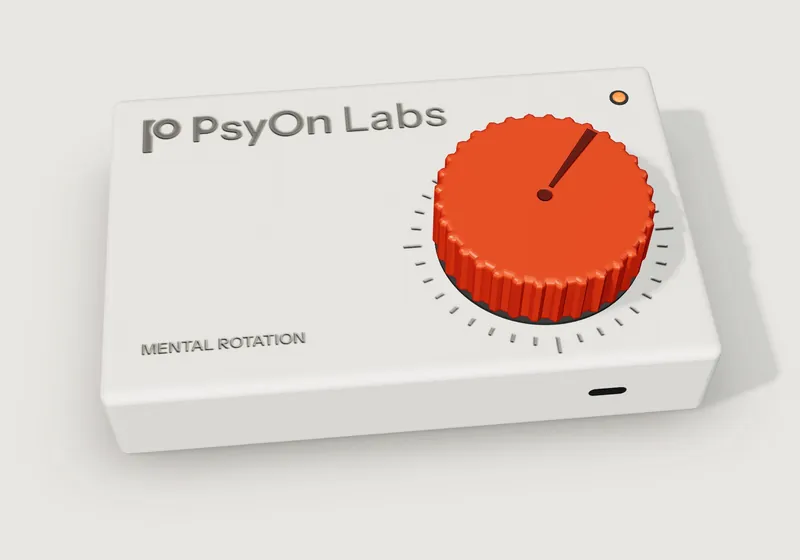
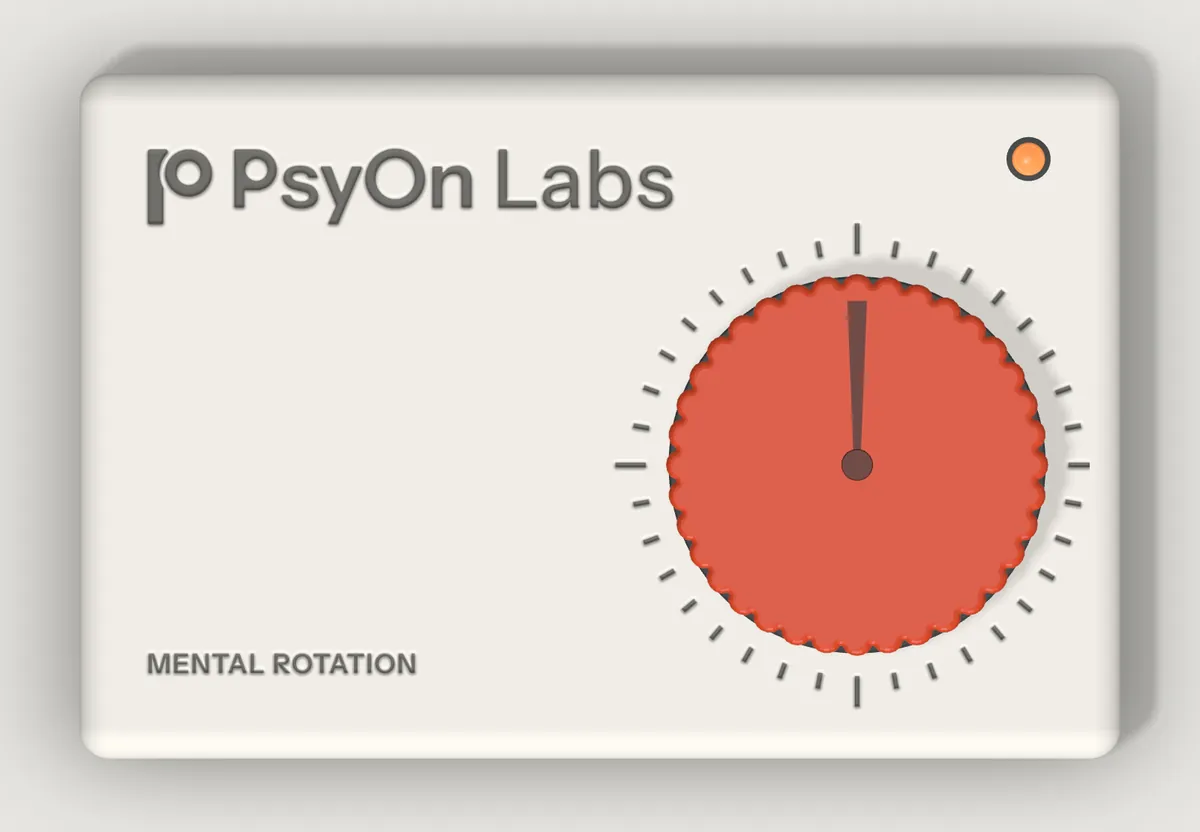
The Mental Rotation device has a knob on top of the box, not buttons. As the knob turns, the object on screen turns with it, until it lines up with the target.

Concept render, seen from above, of the Mental Rotation box with its knob and tick scale.
Concept render
Target
Your figure

Difference from target0°

A letter P used as a rotated letter stimulus

The same knob, with a rotated letter stimulus0°

On-screen illustration

Three instruments to start

Each is matched to one experiment that departments already teach. All three are in development.

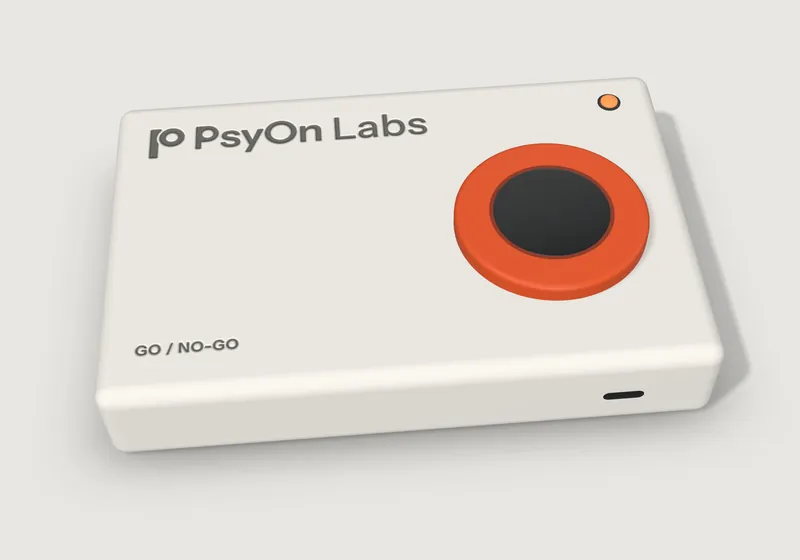
Concept render of a white box with a vermilion collar around a dark infrared window, labelled Go/No-Go, with the PsyOn Labs logo debossed on top.
Concept render

Go/No-Go

Respond to one kind of cue and hold back on another. This instrument is meant to show what happens in the moment of holding back.

Studies
Response inhibition and impulsivity
Response
A hand movement read by an infrared sensor, with no key to press.
More on Go/No-Go
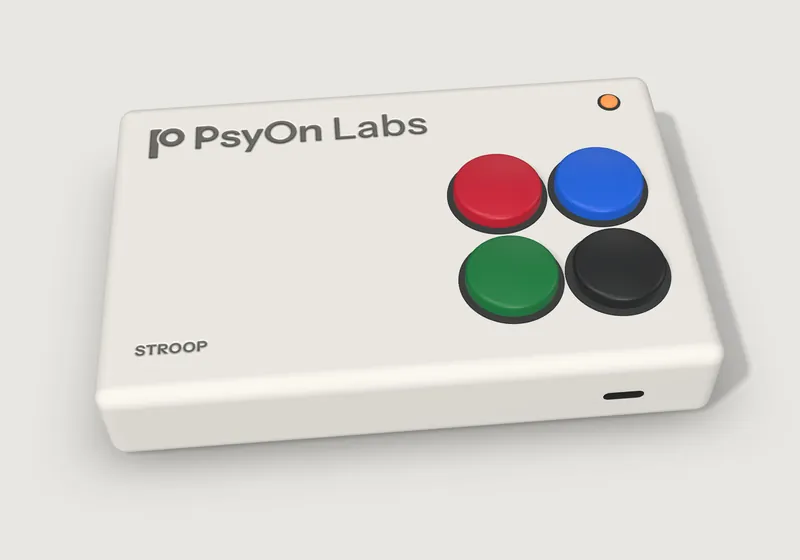
Concept render of a white box with four round response keys in red, blue, green and black, labelled Stroop, with the PsyOn Labs logo debossed on top.
Concept render

Stroop

Name the ink colour and ignore the word. This instrument is meant to record what that conflict costs, beyond the time on the clock.

Studies
Selective attention and interference
Response
Four colour keys in this concept, or a touchless infrared response.
More on Stroop
Concept render of a white box with a large fluted vermilion turning knob on top, labelled Mental Rotation, with the PsyOn Labs logo debossed beside it.
Concept render

Mental Rotation

Turn the knob on top of the box and the 3D object on screen turns with it, until it matches the target. There are no buttons.

Studies
Spatial visualisation
Response
A turnable knob on top of the box.
More on Mental Rotation

Run, capture, export

A practical should end with data students can analyse. This is how a session is designed to go.

1

Run

Plug the device into a laptop and start the task. Instructions and the protocol come with the instrument.

  1. Device connectedUSB or Bluetooth
  2. ProtocolMental Rotation
  3. ParticipantP07
  4. Consent templateIncluded
2

Capture

Watch live graphs while the participant works. Movement, skin, face and brain signals can sit alongside the task, depending on the protocol.

Movement, infrared
Skin conductance, GSR
Illustrative traces
3

Export

Take the time-stamped data straight into the statistics software your department already teaches.

  • SPSS
  • R
  • JASP
time_mstrialstart_degfinal_degtime_taken_ms
12480112023412
1891024511876
2435531603594120
3102048002544

Illustrative rows, not recorded data.

Where we are

We are at the idea stage. Validation is a step before release, and no instrument has completed it yet.

  1. Discover We are here

    Interview faculty and heads of department, and settle the three launch protocols.

  2. Prototype

    Build first working devices for Go/No-Go, Stroop and Mental Rotation.

  3. Validate

    Pilot with undergraduate students under ethics approval, and check reliability and validity against standard versions of each task.

  4. Beta

    Trial the instruments and the first software version in pilot departments.

  5. Launch

    Open the Starter Lab for quote requests and submit the validation paper.

Bring these experiments into your lab

Tell us what your department teaches. We will tell you honestly what we can show today and what comes next.